
TOYOTA EXPANDS MULTI-PATHWAY STRATEGY WITH FOUR NEW MODELS



**First ever RAV4 plug-in hybrid and LandCruiser 300 performance hybrid for
Australia** **BEV range expanded with all-new bZ4X Touring and HiLux
BEV** **Seven powertrain options across the Toyota range offer Australian
customers the right powertrain for their needs**
Toyota continues to build on its multi-pathway strategy with the arrival of four new
models including its first-ever RAV4 plug-in hybrid, HiLux BEV and LandCruiser
300 Series performance hybrid.
In addition to the new powertrain offerings in current vehicle lines, it is also
expanding its fully-electric SUV range with the bZ4X Touring now on sale
alongside the upgraded bZ4X SUV.
Toyota now offers seven different powertrains across its entire Australian range to
ensure it continues to address the challenge of reducing CO2 tailpipe emissions
while providing Australian customers with the right vehicle, with the right
powertrain that meets their needs and use cases.
Toyota Australia Vice President Sales, Marketing and Franchise Operations John
Pappas said the expansion of Toyota’s powertrain choice reflected the diverse
needs of Australian motorists and will further drive its target to achieve 30 per cent
of its total sales being zero and low-emission vehicles – PHEV, BEV and FCEV –
by the end of 2030.
“As a brand that sells vehicles across the globe, Toyota has long recognised the value in pursuing
a multi-pathway powertrain strategy as there is no ‘one-size fits all’ when it comes to customer
needs and desires and driving our decarbonisation goals forward,” Mr Pappas said.
“We started talking about this strategy nearly two decades ago but you could say it started with
the introduction of the Prius, our first hybrid, back in 2001 – a vehicle that was designed to
reduce fuel consumption and emissions while not impacting the everyday real-world driving that
Australians were used to.
“Since then, we have further developed our efficiency hybrid system to deliver greater performance
and reduced fuel consumption and used those learnings and technologies to improve on our petrol and
diesel internal combustion engines as well.
“More recently, we have added battery electric and fuel cell electric powertrains, and now plug-in
and performance hybrids.
“Every powertrain we offer, has a particular purpose and is designed to optimise performance and
fuel efficiency depending on its use, and ensure we continue to offer all Australians, across the
country, the vehicle they need or desire,” he said.
Each powertrain that Toyota offers has a particular role to play in the vehicles in which it is
available that is based on the inherent strengths of the powertrain.
Toyota’s GR sports car range is offered with a petrol internal combustion engine – turbocharged in
GR Yaris and GR Corolla – that delivers the high performance and emotional soundtrack for driving
enthusiasts.
For those customers that demand the long range and strong low-rev torque for four-wheel driving,
towing or carrying heavy loads, Toyota’s trusted 2.8-litre four-cylinder and 3.3-litre V6
turbo-diesel engines remain the optimum choice.
Since launching the original Prius in 2001, Toyota has continued to refine its efficiency hybrid
system that marries a small petrol engine with electric motors to provide the optimum balance of
performance, efficiency and convenience for everyday driving.
Passenger cars and SUVs with an efficiency hybrid powertrain including Yaris, Yaris Cross, Corolla,
Corolla Cross, Camry, C-HR, RAV4 and Kluger surpassed 500,000 sales of hybrid vehicles in Australia
in 2024.
The efficiency hybrid system combines a naturally aspirated engine with two electric
motor-generators for 2WD models and three for AWD models, delivering remarkable fuel economy across
the line up.
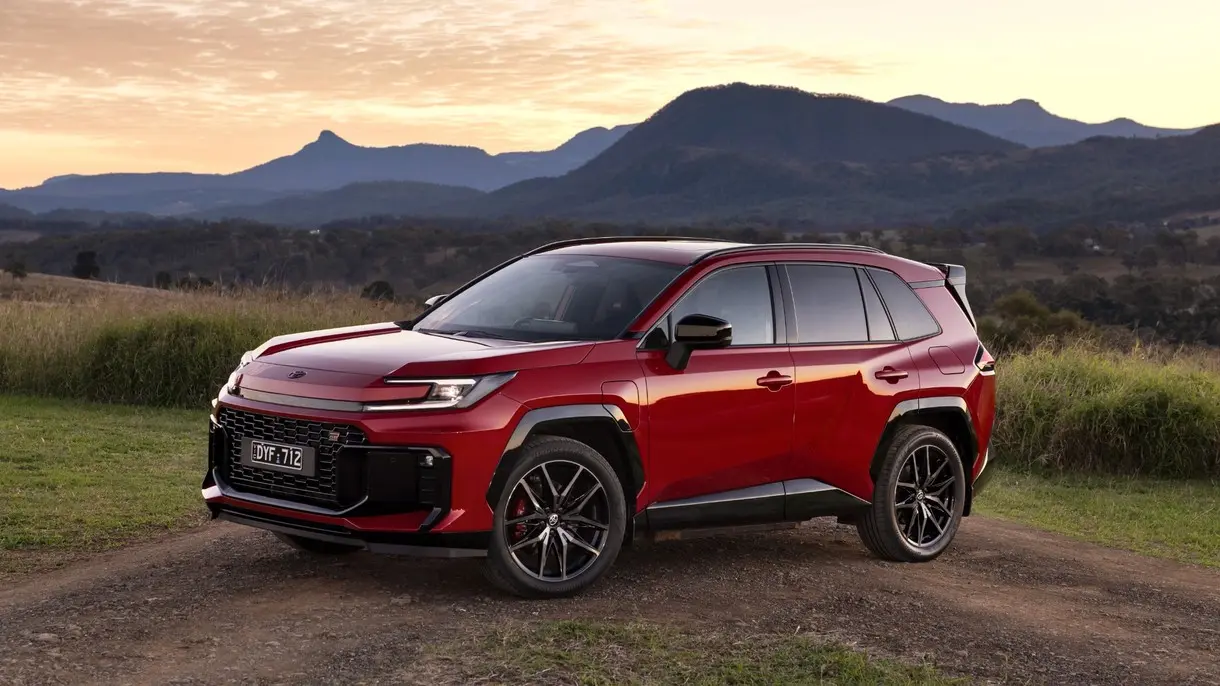
For customers that want more performance from their powertrain, Toyota is now introducing its
first-ever plug-in hybrid system that is offered in RAV4 XSE and GR Sport grades.
The 2.5-litre plug-in hybrid system offers up to 154km of EV-only driving1 around the city and a
substantial increase in combined power for the open road with maximum outputs of 200kW for the XSE
2WD and 227kW for the XSE AWD and GR Sport variants.
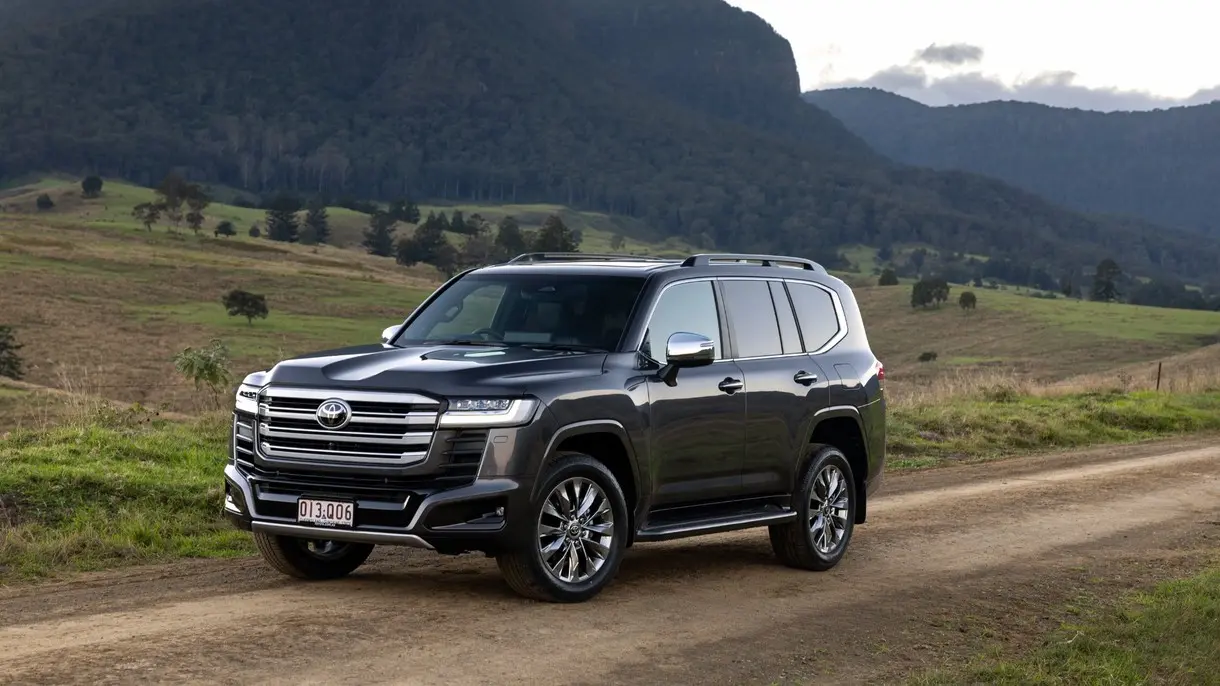
Toyota’s LandCruiser is now also the beneficiary of greater power output with the addition of a new
performance hybrid powertrain for the top-of-the-range Sahara ZX and GR Sport grades.
The twin-turbo 3.5-litre V6 one motor hybrid system is already available in Toyota’s full-size
Tundra pick-up and generates maximum combined outputs of 341kW of power and 790Nm of torque, making
it perfect for long distance cruising or towing in the Sahara ZX, or serious off-roading in the GR
Sport.
As part of its multi-pathway strategy, Toyota continues to expand its range of pure electric
vehicles with the all-new bZ4X Touring model joining the upgraded bZ4X SUV that was launched in
late 2025.
The new AWD-only bZ4X Touring gains a larger rear luggage space and even more power with a combined
output of 280kW, making it ideal for those customers
with an active lifestyle who like to get out of the city for weekends away.
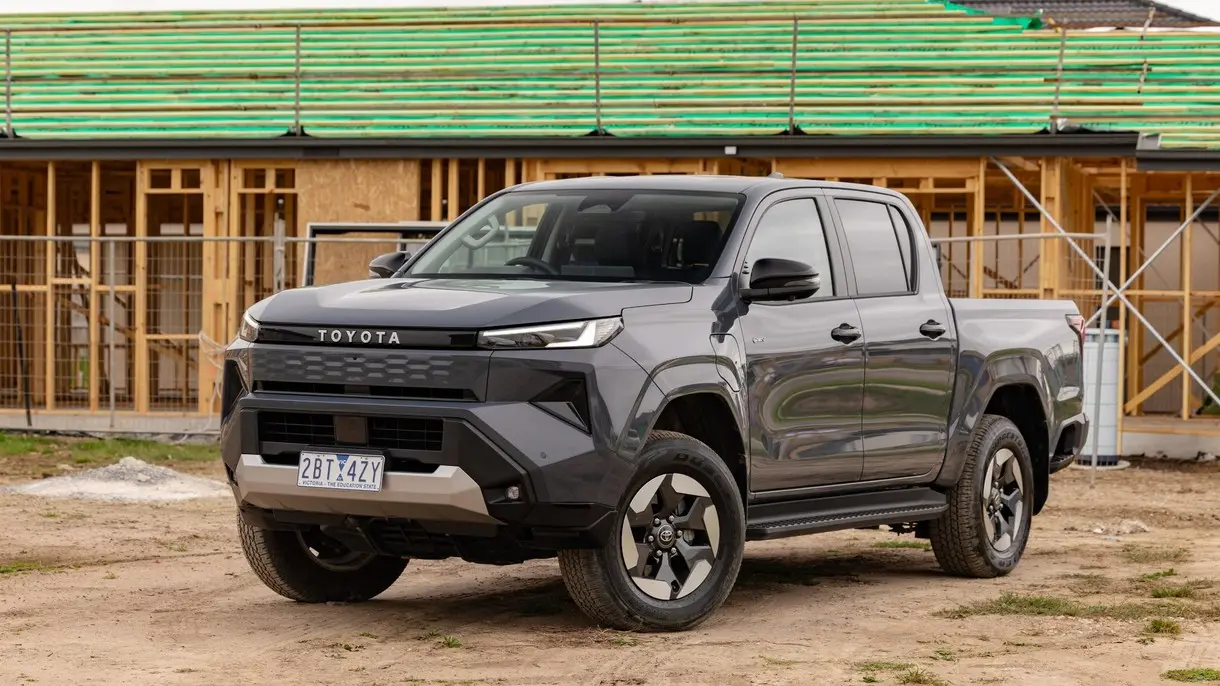
Toyota has also launched its first-ever HiLux BEV, a vehicle that was developed
specifically with mining, government and fleet customers in mind, who require a
vehicle that delivers on reliability and performance in the harshest conditions.
The HiLux BEV is available as a double-cab 4X4 model in SR cab-chassis and
pick-up and SR5 pick-up configurations and offers similar on and off-road
performance to its turbo-diesel counterparts with payload ranging from 715kg to
855kg2 and a towing capacity of 2000kg3.
To ensure the packaging of the electric powertrain and battery delivers on the
demands of the vehicle usage, the HiLux BEV uses a relatively small 59.2kWh
lithium-ion battery that provides a driving range of up to 315km for the pick-up and
245km for the cab-chassis4, which is ample for the back-to-base charging fleet
operations.
Toyota will further expand its BEV range in 2026 with the launch of the C-HR BEV,
and looking further to the future, globally is committed to continuing to develop its
hydrogen fuel-cell powertrain technology for motor vehicles.
While hydrogen refuelling infrastructure remains limited, the Mirai FCEV is
currently available for lease by businesses in Victoria and ACT, and offers fast
refuelling and the smooth and refined performance of a high-capacity electric
powertrain.
In 2028, Toyota will also introduce a HiLux FCEV aimed at fleets that like the
HiLux BEV, offers zero-CO2 emission powertrain technology and can take
advantage of back-to-base refuelling opportunities.
Toyota’s multi-pathway powertrain strategy continues to evolve with new
innovations and technology always being explored to ensure it meets the diverse
motoring needs of all Australians.
…ends/
1 Results were achieved under test conditions and do not reflect the driving range
in real world driving. 154km range, achieved for Australian plug-in hybrid RAV4
PHEV 2WD SUV variants, based on consumption rate of 184Wh/km using the
New European Driving Cycle (NEDC) laboratory test [combined drive cycle]
mandated by the ADR 81/02 (displayed on the Energy Consumption label affixed
to the car). The electric range and the energy consumption values were
determined using a fully charged battery in a laboratory test and are not reflective
of real-world driving. Actual driving range may vary depending on accessories
fitted, battery age and condition, climate, driving style, use of heating/cooling,
traffic conditions, and vehicle load. For more information, please visit
toyota.com.au/electrified/ faqs 2 Weights/mass/volumes/dimensions are
approximate and subject to individual vehicle variances, and should be confirmed
before fitting any accessories, towing or otherwise relying on this value. 3 Check
vehicle’s Owner’s Manual / Toyota Basic Towing Guide before attaching loads. 4
Results were achieved under test conditions and do not reflect the driving range in
real world driving. Range achieved using the New European Driving Cycle (NEDC)
laboratory test [combined drive cycle] mandated by the ADR 81/02 (displayed on
the Energy Consumption label affixed to the car). The electric range and the
energy consumption values were determined using a fully charged battery in a
laboratory test and are not reflective of real-world driving. Actual driving range may
vary depending on accessories fitted, battery age and condition, climate, driving
style, use of heating/cooling, traffic conditions, and vehicle load. For more
information, please visit toyota.com.au/electrified/ faqs 6 See
toyota.com.au/owners/warranty for applicable warranty period, inclusions &
limitations This warranty does not limit & may not necessarily exceed your rights
under the Australian Consumer Law. 7 Max price quoted is model specific. Applies
to standard scheduled logbook servicing (normal operating conditions) [for 5
yrs/75,000kms (whichever occurs first) up to a max. 5 services. Excludes
Government & Rental vehicles. For details see your Toyota dealer or visit
toyota.com.au/advantage. 8 Manufacturer's recommended retail price provided